
Search Virginia Arrest Records
Virginia arrest records are maintained by multiple agencies across the state. The Virginia State Police, county sheriffs, and independent city police departments all keep records of arrests within their jurisdictions. You can search them through several official channels, including the Virginia Courts Case Information System, which is free to use online, and the Virginia State Police CARE system for formal criminal history requests. Whether you need a basic case lookup or a certified copy, this guide covers where to go, what fees apply, and what state law says about public access to arrest and criminal history information in Virginia.
Virginia Arrest Records Overview
Virginia Arrest Record Sources
Several agencies in Virginia maintain arrest records. The main one is the Virginia State Police, which runs the Central Criminal Records Exchange, known as the CCRE. Every law enforcement agency in the state must report arrest and disposition data to the CCRE. This creates a statewide database of criminal history information. The public can request records from this database through the Civil and Applicant Records Exchange, called CARE. Two forms handle most requests: the SP-167 for individuals and the general public, and the SP-230 for certain organizations and non-criminal justice agencies. Both forms are available for download at the Virginia State Police website.
Local agencies also hold records. County sheriffs and city police departments keep arrest reports, booking logs, and incident files. Each jurisdiction handles its own requests and may have different procedures for access. Some agencies post daily arrest logs online. Others require a written request by mail or in person. If you know the county or city where the arrest occurred, contacting that agency directly is often the fastest route.
Courts are a third source. Virginia Circuit Courts handle felony cases and civil proceedings. General District Courts cover misdemeanor cases, traffic violations, and smaller civil matters. The Virginia Judiciary gives free online access to case records through two separate portals, one for each court level. Search results include charge details, hearing dates, and case dispositions going back many years. For records not available online, a visit to the court clerk in person is the next step.
The Virginia State Police at vsp.virginia.gov is the primary hub for criminal history record requests, FOIA submissions, and access to the CARE system, including downloadable forms and contact information for state police offices across Virginia.
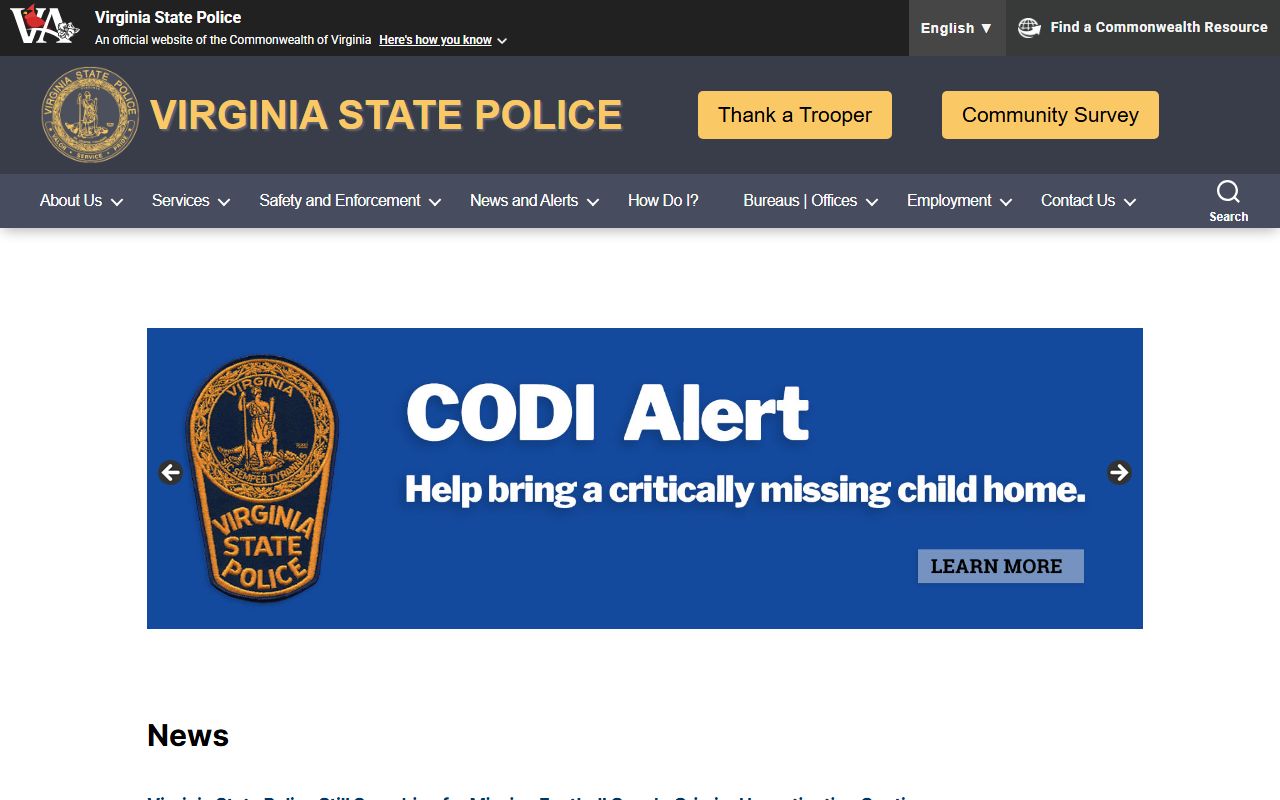
The State Police headquarters is at 7700 Midlothian Turnpike in North Chesterfield. For mailed SP-167 or SP-230 form requests, send to the CARE office at P.O. Box 85076, Richmond, VA 23285. The main phone number is (804) 674-2000.
Requesting Criminal History Records in Virginia
The SP-167 form is for individuals and the general public. You fill it out, get your signature notarized, and mail it in with payment. Standard processing takes about 15 business days after the Virginia State Police receives a complete request. If you want results sent to a third party, both you and that party must provide notarized signatures. The fee is $15 for a standard criminal history check. A combined criminal history and sex offender registry check costs $20. Payment can be made by credit card, money order, certified check, or business check. Cash is accepted only for in-person requests at the State Police headquarters.
The Virginia State Police CARE system processes all official criminal history requests using the SP-167 and SP-230 forms. There is no same-day or expedited option for mail requests.
For faster turnaround, the State Police suggests sending forms via next-day air and including a pre-paid return envelope. Both postage costs are the responsibility of the requester. In-person drop-off is also accepted at State Police headquarters during business hours.
Certain authorized organizations use the SP-230 form. This form does not require notarization. It is available to adoption agencies, licensed child care centers, adult care facilities, security companies, volunteer organizations, and other entities authorized by Virginia statute. These organizations receive responses through the Non-Criminal Justice Interface, which provides electronic results within 72 hours. The SP-230 fee is also $15. For more thorough checks, fingerprint-based searches are an option. A state fingerprint check costs $13.75, and adding an FBI search costs $13.25, for a combined total of $27. The first fingerprint card submitted to the State Police for fingerprinting services costs $10, with additional cards at $5 each.
Virginia Code § 19.2-389 governs the dissemination of criminal history record information, specifying exactly who may receive records from the CCRE and under what conditions, and restricting unauthorized access.
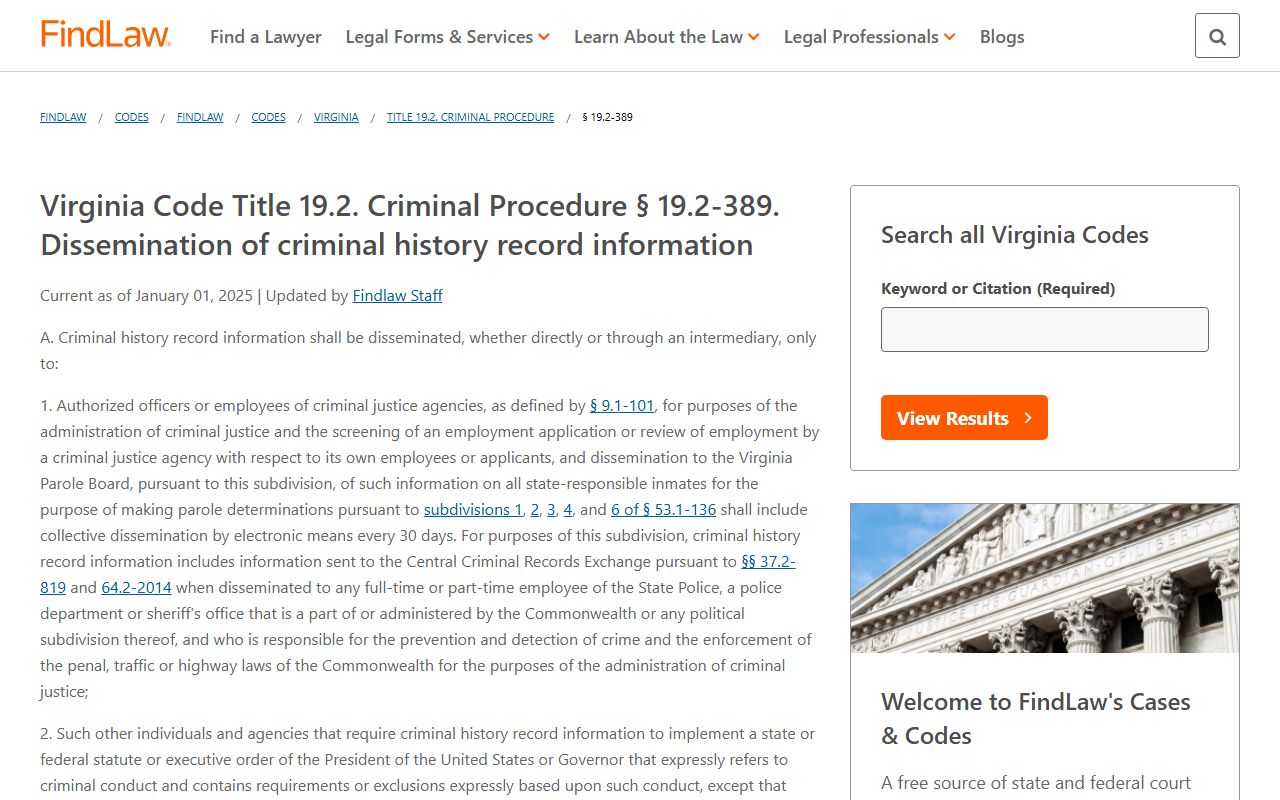
Under § 19.2-389, any person who obtains criminal records under false pretenses or shares them with unauthorized parties faces a Class 2 misdemeanor charge under § 9.1-136. The statute designates the CCRE as the official statewide repository and requires all agencies to report arrest and disposition data on an ongoing basis.
Virginia Court Records Search
The Virginia Judiciary provides two free online case search portals. The Circuit Court portal covers felony criminal cases. The General District Court portal covers misdemeanor cases, traffic violations, and civil cases up to $25,000. Both let you search by party name, case number, or hearing date at no cost. Results include party details, charge information, case status, scheduled hearings, and final dispositions. No account is needed. You can also search for information on court notices like subpoenas and summonses through the General District Court system.
Access the Virginia Courts Case Information System at vacourts.gov to search criminal case records from Circuit and General District Courts statewide.
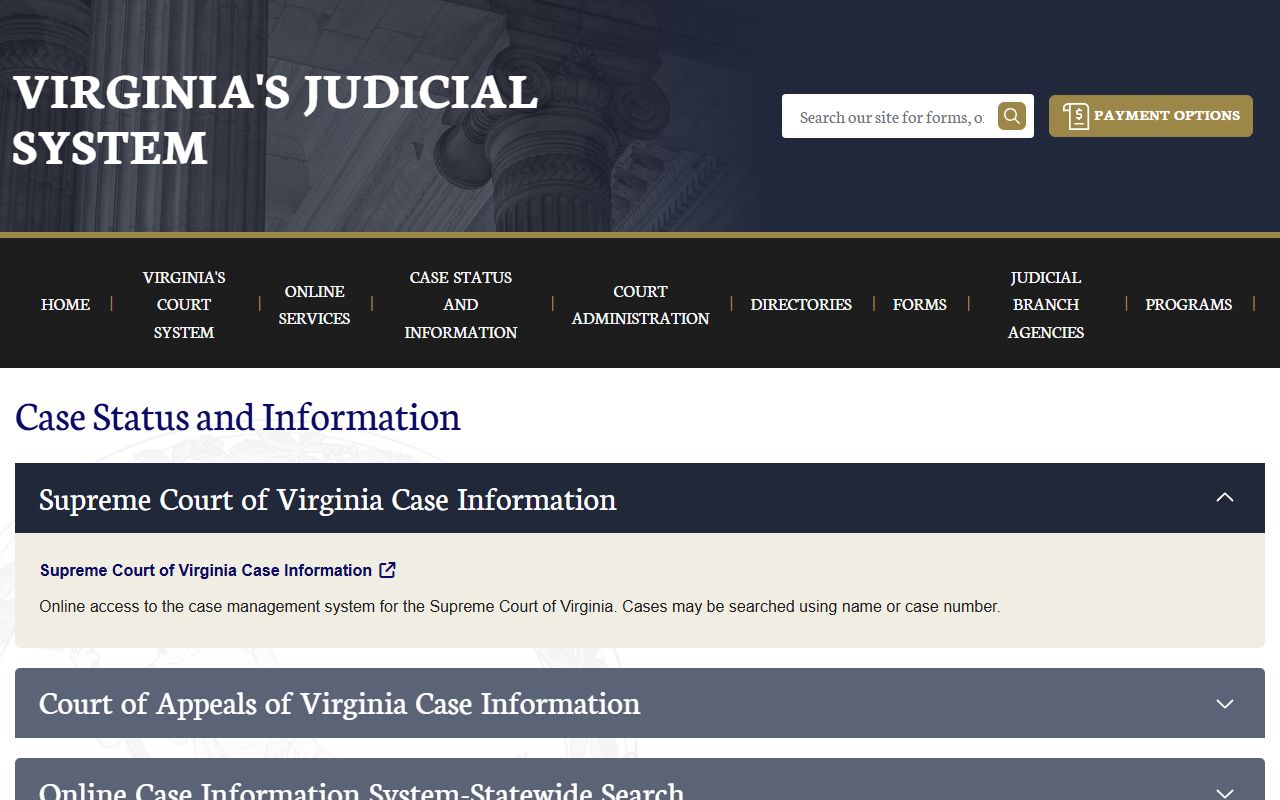
The Virginia Judiciary website also provides a full directory of every court in the state, with contact information and filing hours for each location. This makes it easy to find the right clerk's office for any county or city.
Certain records are excluded from the online portals. Sealed or expunged files, juvenile court records, protective order proceedings, and civil commitment cases do not appear in public searches. For those, you need to contact the court clerk directly, and a court order may be required for access. Some courts in smaller or more rural areas may have limited online data, so calling ahead is a good idea.
For certified copies of court records, contact the clerk of court in person or by mail. Fees apply for copies. The Virginia General Assembly Code of Virginia at law.lis.virginia.gov contains all statutes governing arrest records, criminal procedure, and public record access in the state.
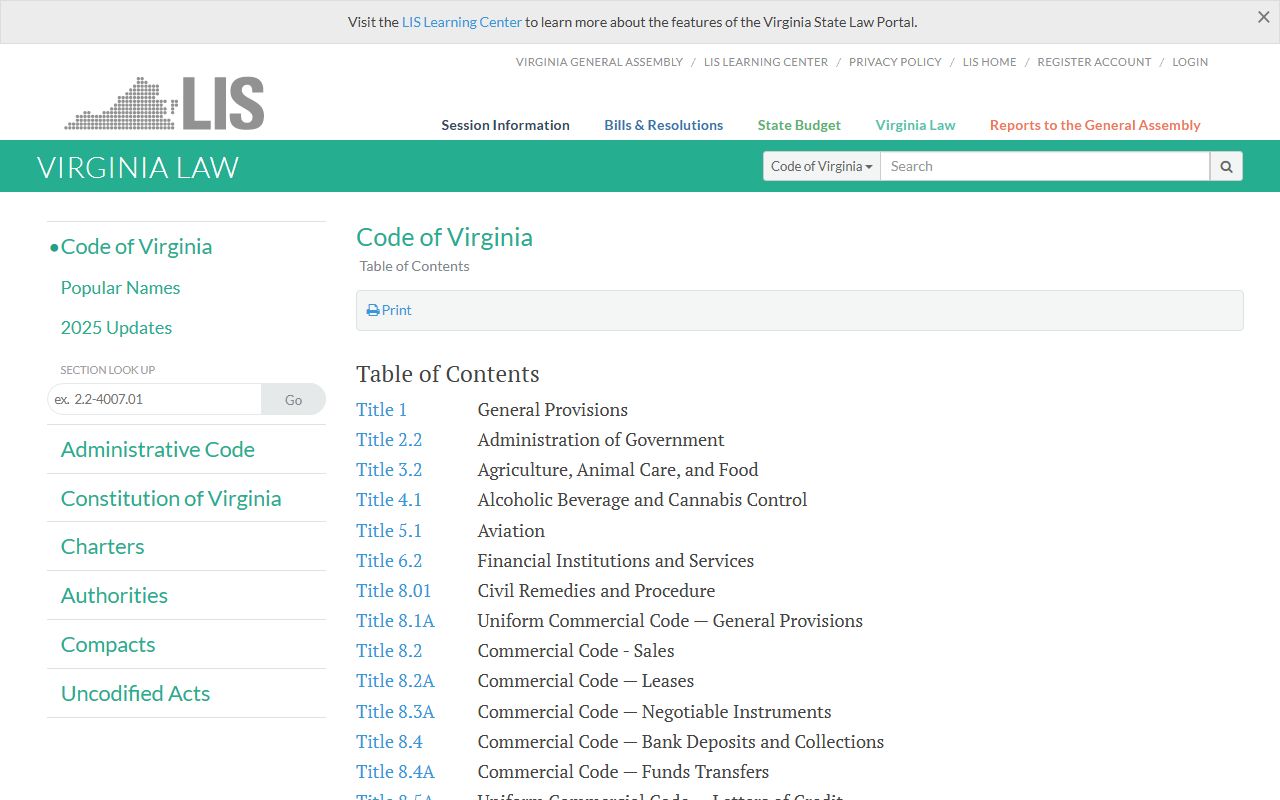
You can search the Code by keyword, title, or chapter to find any statute related to arrest records, criminal history, or public information access. Key sections include the Freedom of Information Act, the criminal procedure statutes, and the public records retention laws.
Your Rights Under Virginia FOIA
Virginia's Freedom of Information Act presumes that all government records are public unless a specific law says otherwise. Under § 2.2-3704(A) of the Code of Virginia, public records must be open to citizens during regular business hours. You do not need to explain why you want the records. The agency cannot ask for a reason before responding. Your request must describe the records with reasonable specificity, but you do not need to cite FOIA to trigger its protections. The agency must respond within five working days. If they cannot complete the request in that time, they must send a written response explaining the delay or the specific code section authorizing withholding.
Arrests get strong coverage under FOIA. With limited exceptions for juveniles, the identities of people who are arrested, the charges against them, and the status of those charges must be disclosed without exception. This covers felony, misdemeanor, and traffic arrests. Any chronological listing of adult arrests is a public document. A 2021 update also expanded access to criminal investigative files once a case is no longer active or ongoing. Agencies may have up to 60 additional work days to respond to those specific requests. FOIA fees may not exceed the actual cost to find, copy, and provide the records. If a request is expected to cost more than $200, the agency may require a deposit before doing the work.
For questions about your FOIA rights or help challenging a denial, contact the Virginia Freedom of Information Advisory Council at foiacouncil.dls.virginia.gov, by phone at (804) 698-1810, or toll-free at 1-866-448-4100. The Council provides free guidance to citizens and can issue formal written opinions on disputed access questions.
The FOIA law is codified at § 2.2-3700 et seq. of the Code of Virginia and covers public access to government records including arrest records and incident reports from law enforcement agencies across the state.
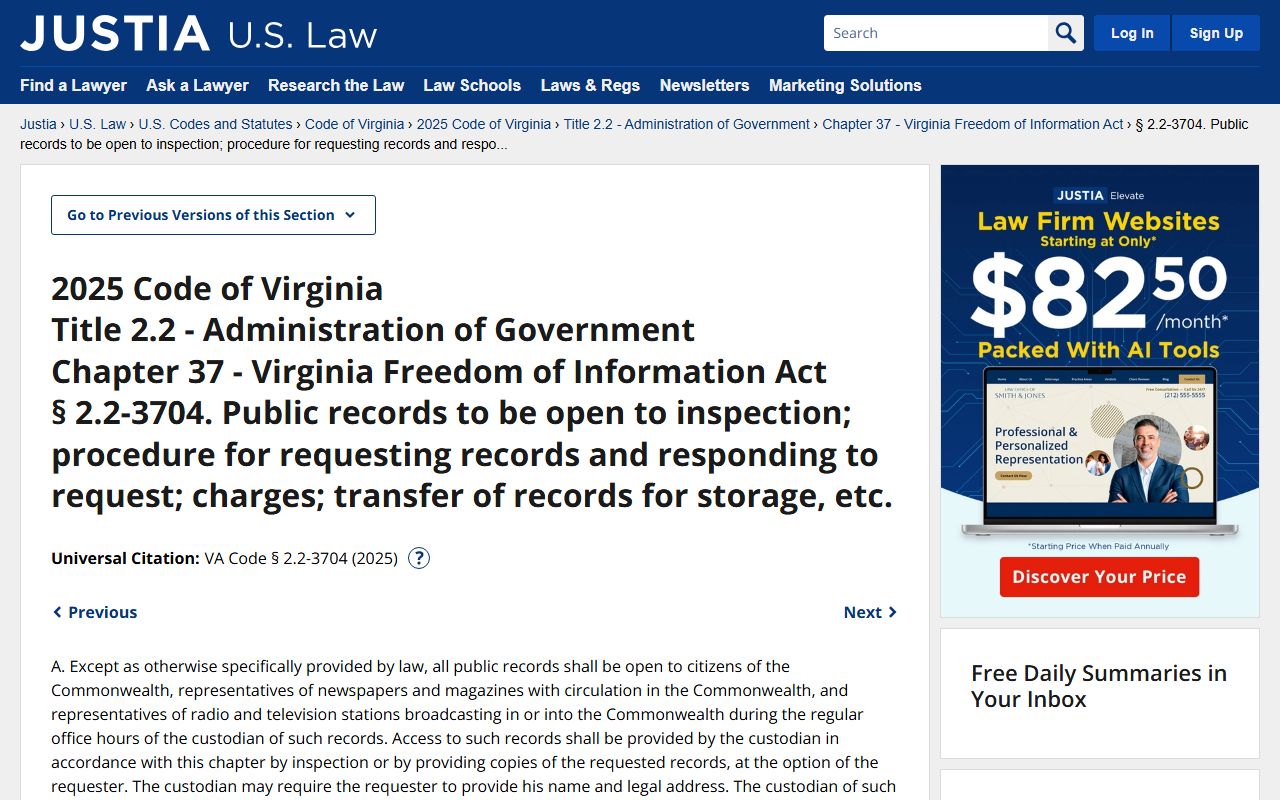
The FOIA statute requires agencies to specify the exact code section they rely on when withholding records. Vague denials are not sufficient under Virginia law.
The Virginia State Police maintains an online FOIA request portal at vsp.nextrequest.com where you can submit requests and track their status. FOIA requests to the State Police are handled by the FOIA officer at the Criminal Justice Information Services division, reachable at 804-674-2642 or FOIA@vsp.virginia.gov.
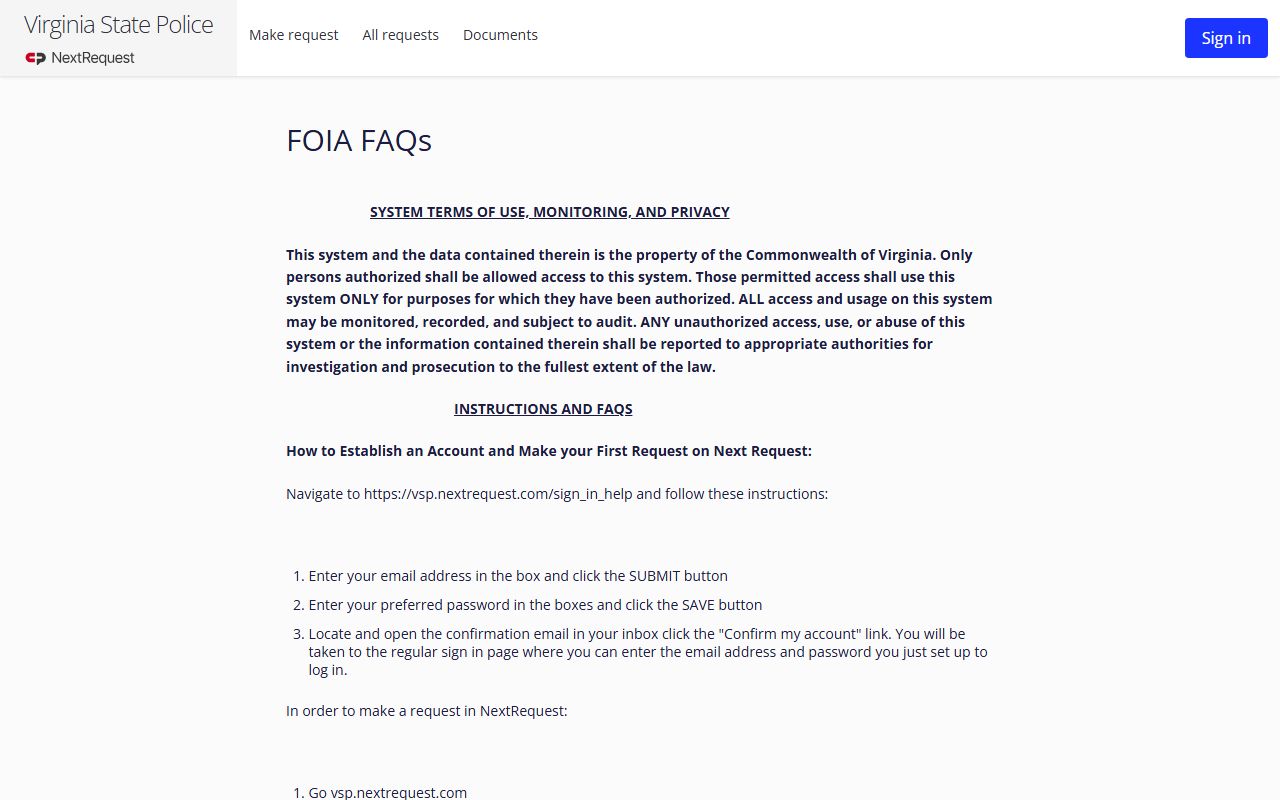
The State Police FOIA officer is First Sergeant William "Kent" Shipman. You can also mail requests to Virginia State Police Criminal Justice Information Services, P.O. Box 27472, Richmond, VA 23261-7472.
Note: Active criminal investigations are exempt under § 52-8.3. Criminal investigative documents, other than basic incident information, may also be withheld under § 2.2-3706(A)(2)(a) until the investigation concludes.
VADOC Inmate Records
The Virginia Department of Corrections runs an online Offender Locator that lets you search for people in state-run correctional facilities. You can search by name or DOC identification number, with optional filters for age, gender, race, or expected release date. Results include the inmate's current facility, crime of conviction, arrest date, sentencing details, and expected release date. The tool is available at vadoc.virginia.gov at no charge. The VADOC system does not include people held in local jails, which are run by county and city sheriffs, or anyone in federal custody. Juvenile records are also excluded because they are confidential under Virginia law. Inmates are typically entered into the VADOC database within 60 days after the court issues its sentencing order.
If you cannot locate someone in the VADOC search, they may still be in local custody awaiting sentencing, or the record may not yet have been processed. Contact the Department of Corrections at (804) 674-3000 with questions. The Central Records address is Virginia Department of Corrections, 6900 Atmore Drive, Richmond, VA 23225.
The Virginia State Police Data Analysis and Reporting Team, known as DART, publishes annual statewide crime and arrest statistics at vsp.virginia.gov/DART.shtm, including data broken down by jurisdiction, offense type, and demographic characteristics.
The DART portal uses the National Incident-Based Reporting System format, which captures detailed data on each criminal incident. The portal tracks arrest statistics, crime rates, and demographic information, and makes annual Crime in Virginia publications available for download.
Expunging Virginia Arrest Records
Virginia allows expungement of arrest records under specific conditions. A person may petition if they were acquitted of the charges, if the case was dismissed, or if the prosecutor dropped it. People who were arrested but never formally charged may also petition if the arrest record is inaccurate or misleading. Those who later received an absolute pardon may qualify as well. Starting in July 2025, Virginia law also provides for automatic sealing of certain misdemeanor and felony convictions once set waiting periods have elapsed.
Convictions in Virginia are generally not eligible for expungement, even after someone completes their sentence and probation. Virginia is stricter on this point than many other states. The expungement process begins with filing a petition at the Circuit Court in the jurisdiction where the arrest took place. The petition must include your personal information, the specific arrest or charge you want sealed, and the legal basis for your request. You must also submit fingerprints through the Virginia State Police for identity verification and to check for other records that could affect eligibility. The Commonwealth's Attorney in that jurisdiction receives a copy of the petition and has the right to oppose it. If there is opposition, the court schedules a hearing. The judge then decides whether to grant the petition. If approved, an order is issued directing all relevant agencies to seal the records from public access.
Virginia Code § 19.2-392.2 sets out the full expungement law including eligibility criteria, the filing process, and the effect a successful expungement has on public access to those records.
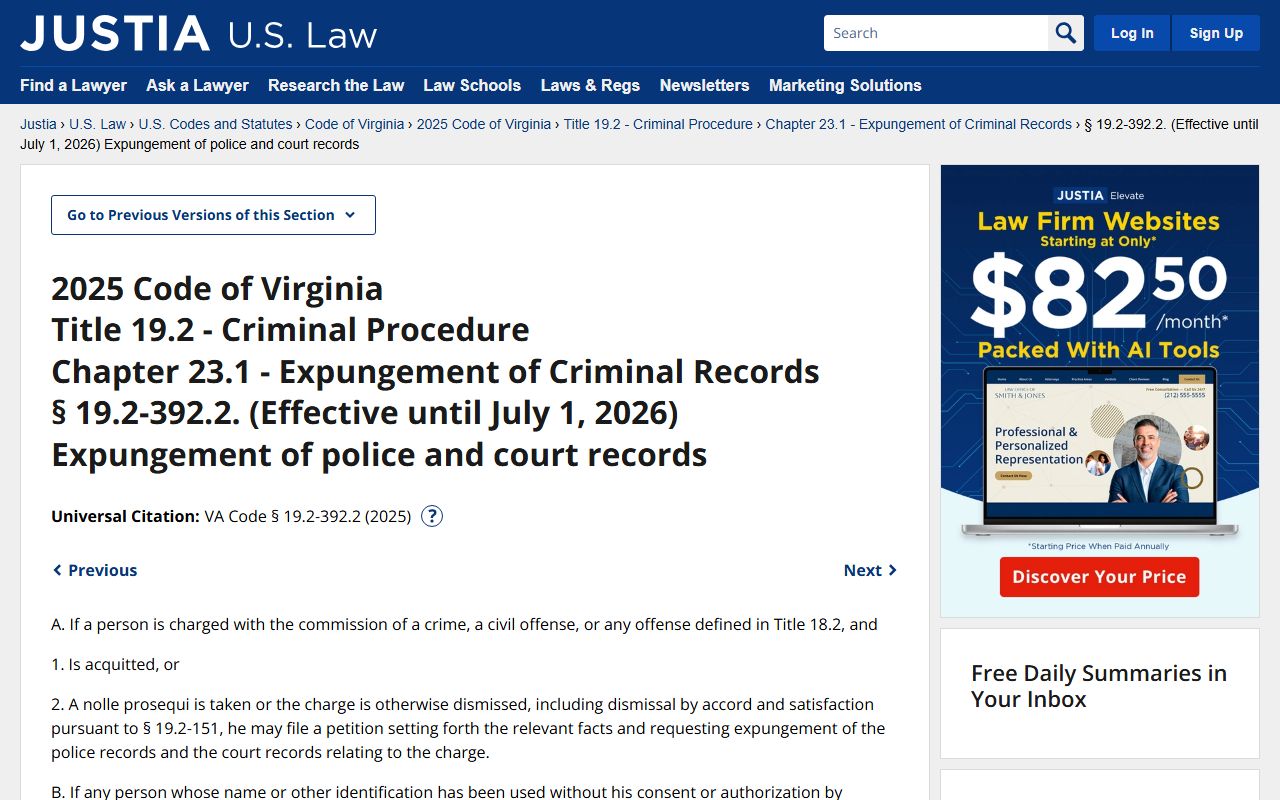
Once sealed, records are not available through standard public searches. Law enforcement agencies can still access sealed records under limited circumstances, but they do not appear in most criminal history checks or public portals.
The Virginia Public Records Act at § 42.1-76 et seq. governs how all public agencies retain and manage records, including arrest records, and sets requirements for archiving historical records with the Library of Virginia.
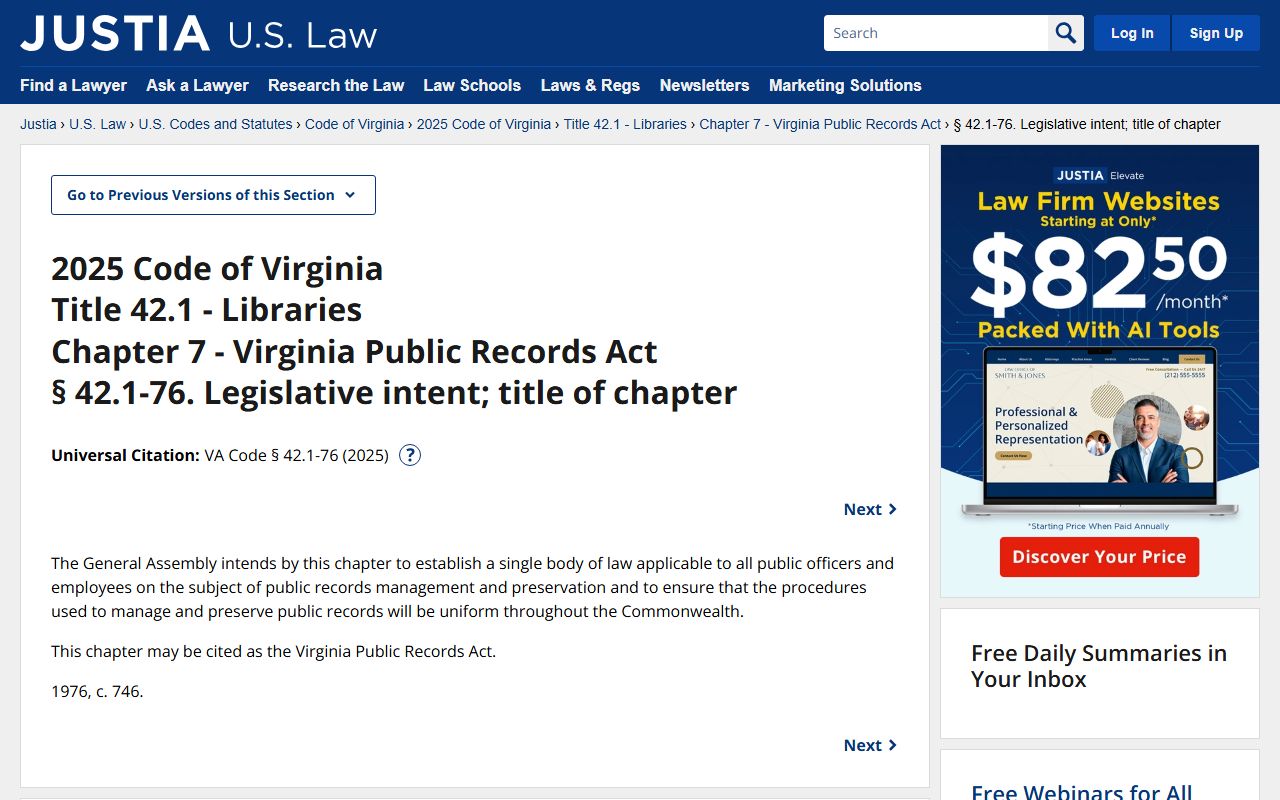
When records are transferred to the Library of Virginia for permanent archiving, the Library becomes the official custodian and handles any FOIA requests for those archived materials going forward.
Virginia Sex Offender Registry
The Virginia State Police maintains the Sex Offender and Crimes Against Minors Registry under Virginia Code §§ 9.1-900 through 9.1-918. This registry lists people convicted of specific sex offenses and crimes against minors. It includes names, photographs, physical descriptions, conviction details, and current registration status. You can search it for free by entering a name, zip code, or using geographic mapping features. The registry is accessible at sex-offender.vsp.virginia.gov. Violent sex offenders are directly searchable on the State Police website. Using registry information to threaten, intimidate, or harass a registered offender or their family is a Class 1 Misdemeanor under Virginia law.
For an official documented search of the registry, use the SP-266 form available from the Virginia State Police. The fee is $15 for a registry-only search or $20 combined with a criminal history check. Registered sex offenders must verify their information with the State Police between one and four times per year depending on the severity of their offense.
The Virginia Administrative Code at 6VAC20-120-60 governs access and review procedures for the Central Criminal Records Exchange, including response timeframes and the process for challenging inaccurate records in the CCRE system.
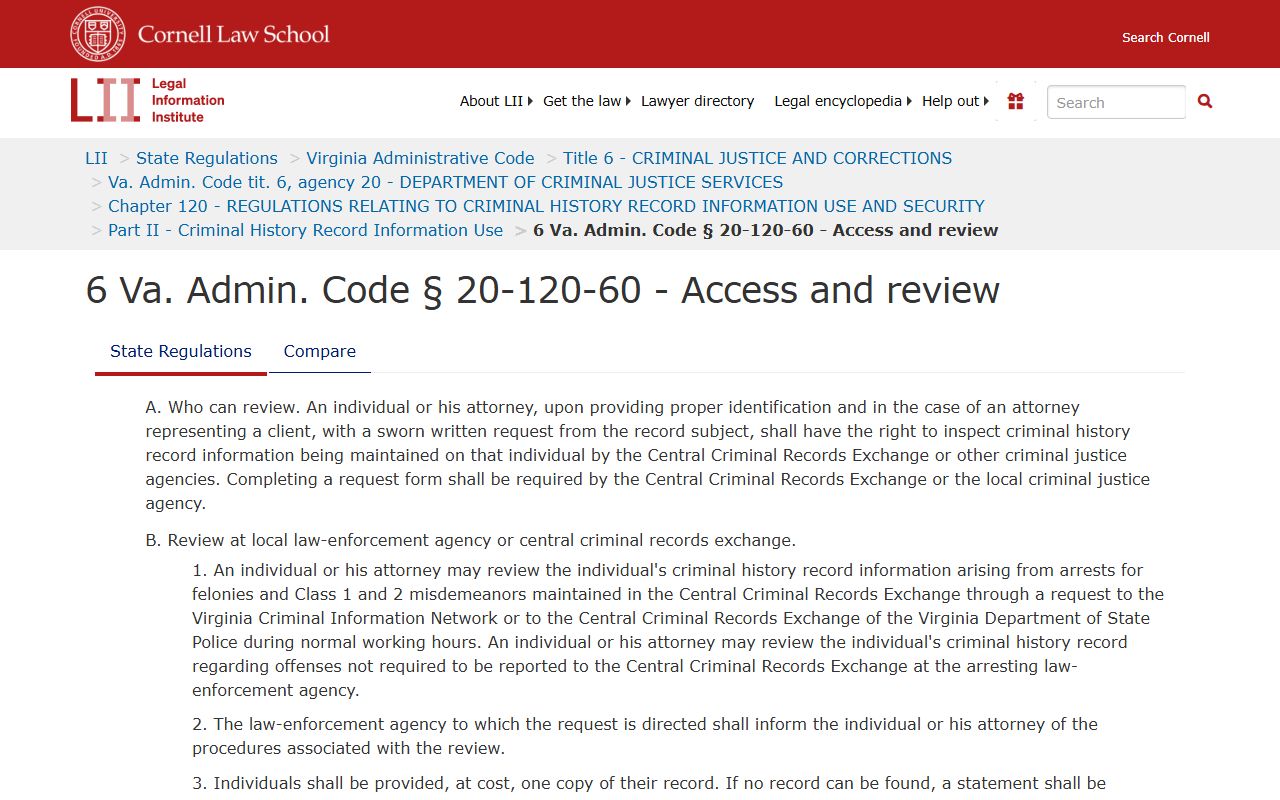
Under these regulations, the time between a records request and delivery must not exceed one week, except when fingerprint identification is required. To challenge an inaccurate arrest record, report the issue to the arresting agency and request fingerprinting to verify your identity. No fee is charged for the challenge process.
Additional Virginia Record Resources
The Virginia Department of Health Division of Vital Records maintains birth and death certificates from 1912 to the present. These records are restricted, not public, and access is limited to the person named, immediate family members, legal representatives, or authorized agencies. They are sometimes relevant in criminal proceedings for identity verification or documenting facts connected to a case. The Division is at P.O. Box 1000, Richmond, VA 23218-1000, and can be reached at (804) 662-6200 or through vdh.virginia.gov/vital-records.
The Virginia Department of Health Vital Records site at vdh.virginia.gov provides information on requesting birth and death certificates that may be needed for identity verification in certain criminal or legal proceedings.
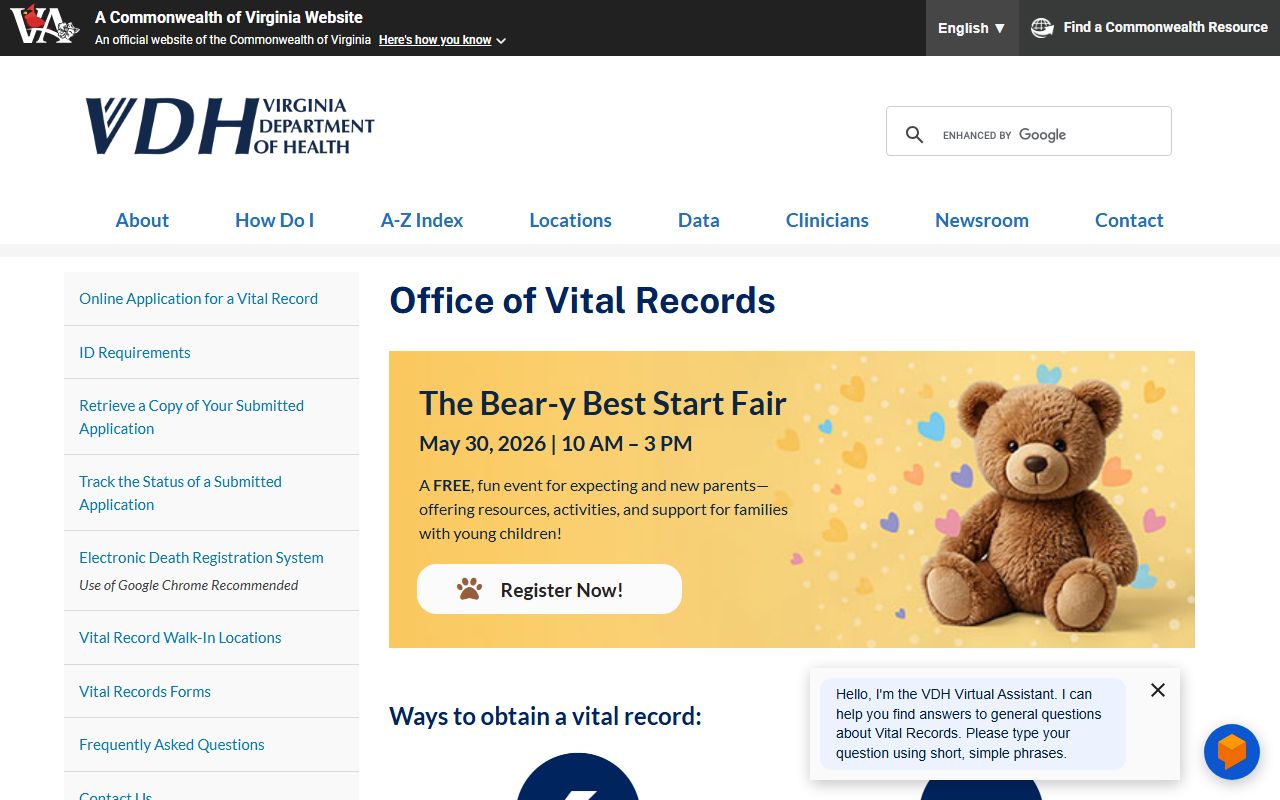
Vital records in Virginia are not arrest records, but they are sometimes needed alongside criminal records in legal matters to establish identity, verify family relationships, or document events relevant to a case.
Browse Virginia Arrest Records by County
Each of Virginia's 95 counties maintains its own law enforcement and court records. Select a county below to find local sheriff office contact information, court case search options, and arrest record resources for that area.
Arrest Records in Major Virginia Cities
Virginia's independent cities manage their own law enforcement and court records separate from any county. Select a city below to find police department contacts, court information, and arrest record resources for that area.